DSLR vs AI Food Photography in 2026: An Honest Comparison
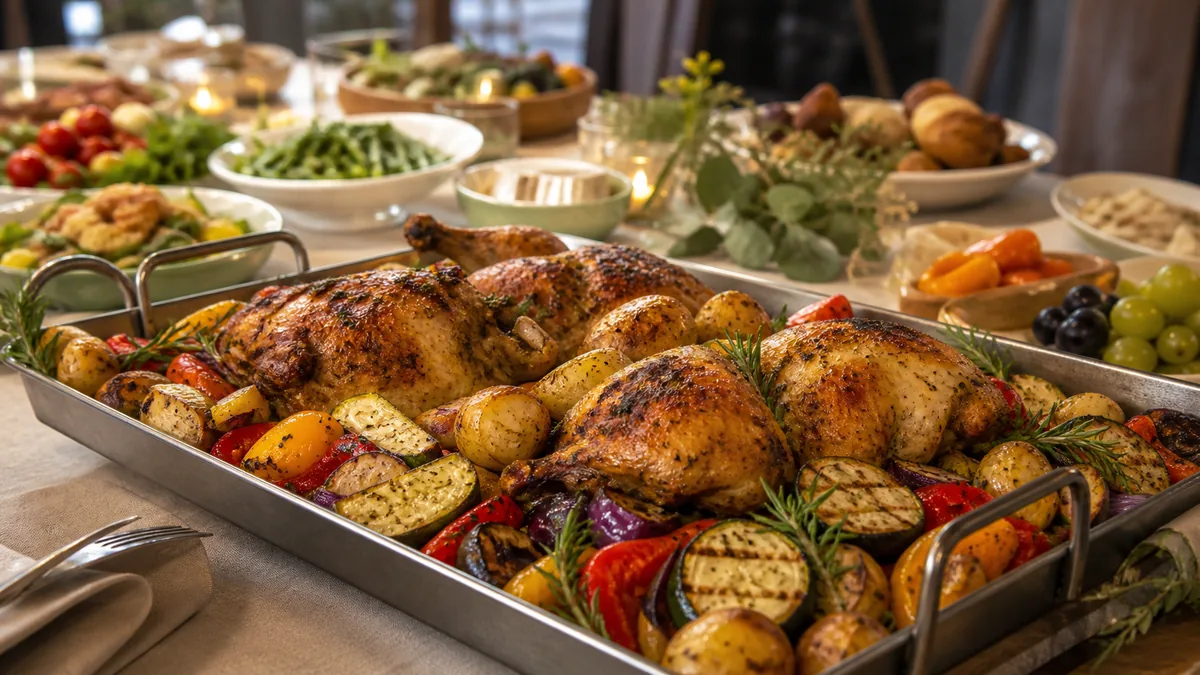
There is no shortage of strong opinions about AI food photography vs DSLR, and most of them pick a side. This comparison does not. A DSLR studio shoot produces genuinely beautiful, art-directed images that AI cannot match for hero work. But for keeping a menu visually current across delivery apps, your website, Google Business, and social, DSLR is no longer the obvious choice — and is often the wrong one. Here is an honest look at cost, turnaround, and quality across eight dish types, and where each approach still clearly wins.
Why this matters for your unit economics
Menu photography used to be a once-a-year expense: shoot in January, live with it until next January. That worked when delivery was a side channel. In 2026, every dish lives in at least four placements — your site, Google Business, two or more delivery apps, plus social and short-form video — and each one crops differently and rewards fresh imagery.
If you refresh the menu twice a year and run quarterly specials, that is four to six photo events per year, per location. Traditional shoots are priced per session and per usable image, and the costs compound fast across a multi-location group. The real question is not whether DSLR is good — it is excellent — but whether it is the right place to spend when the image will be cropped to a few hundred pixels on a delivery app.
The cost reality, in plain numbers
The cleanest way to compare is cost per finished, usable image, including iteration:
| Approach | Per finished image | Iteration (dish change) | Turnaround |
|---|---|---|---|
| DSLR studio | ~$20-$80 | New shoot / callback fee | Days to weeks |
| AI enhancement | ~$0.14-$0.60 | Re-run in minutes | Same day |
The headline per-image gap matters, but the iteration cost is where AI quietly wins. When you swap a bun, change a garnish, or run a special, a DSLR reshoot means scheduling and a callback fee; an AI re-run costs cents and ships the same day. FoodPhoto.ai starts at a $10 Menu Test Pack (10 credits), with plans from $15/month — full numbers on the pricing page.
DSLR vs AI across eight dish types
We compared the same eight categories produced both ways. The pattern is consistent: at delivery-app sizes the gap nearly disappears; under large print scrutiny the studio shot pulls ahead.
Burgers and sandwiches
A stylist who has melted cheese hundreds of times engineers a pull no phone captures on the first try. DSLR wins for a billboard; AI wins for the menu — enhanced phone shots read as clean and appetizing at delivery sizes, and a bun change re-ships in minutes.
Sushi and sashimi
Maki enhances beautifully. Sashimi is harder: translucency and sheen are where AI can look slightly too perfect and a styled shoot has the edge. DSLR wins for sashimi-forward menus; AI wins for everyday maki and rolls. See our phone food photography guide for getting clean sushi inputs.
Pasta and saucy dishes
Sauce sheen and steam are appetite signals AI restores well from a decent phone photo. AI wins for menu and delivery; DSLR wins only for editorial features.
Salads and bowls
High-detail, colorful, and forgiving. AI wins clearly — these enhance fast and look fresh at any size.
Grilled and BBQ
Char, gloss, and "juicy" matter. Both do well; AI wins on speed, DSLR on extreme close-up texture for print.
Fried foods
Crisp edges and golden color enhance reliably. AI wins for menu use.
Drinks and cocktails
Glass, ice, and reflections are technical. A styled shoot still has an edge on complex glassware; AI wins for standard menu drink shots.
Desserts
Gloss and color pop translate well. AI wins for menu; DSLR wins for hero brand imagery.
Across the board: AI wins for menu and delivery; DSLR wins when you are buying a billboard. You can judge the enhancement yourself on one of your own dishes in the Menu Test Pack.
Where DSLR still clearly wins
To be fair to photography, several jobs still belong to a styled shoot:
- Flagship brand campaigns and website hero imagery.
- Signature dishes that define your brand and deserve a definitive shot.
- Large-format print — menu boards, posters, packaging.
- Art-directed editorial where a stylist’s eye is the product.
For these, the per-image cost is justified because the image is the asset, not a delivery thumbnail.
Where AI clearly wins
- Menu and delivery photos at the sizes customers actually see.
- Frequent changes — specials, swaps, seasonal items.
- Consistency across a whole menu enhanced to one standard.
- Multi-location and multi-channel rollouts that would be unaffordable to shoot repeatedly.
For the broader category breakdown, see our best AI food photography tools comparison.
The hidden cost no one budgets for: iteration
The per-image price is only half the story. The bigger, quieter cost of DSLR is iteration — every time a dish changes, you either reshoot or live with a wrong photo. In 2026, dishes change constantly: a new bun, a swapped garnish, a seasonal special, a plating tweak. With a studio model, each change is a callback fee and a scheduling delay, so most operators simply let photos go stale.
With AI, a change is a few cents and a few minutes. That difference compounds across a year far more than the headline per-image gap. A menu that always looks current outperforms a beautiful-but-frozen one on the placements that drive orders — delivery thumbnails, Google Business, and search.
What about quality at the sizes that matter?
The instinct is to compare a DSLR shot and an AI-enhanced shot side by side at full resolution, where the studio image often wins on fine detail. But that is not where the comparison happens in real life. Customers see:
- A delivery thumbnail a few hundred pixels wide.
- A Google Business photo cropped to landscape.
- A social still scrolled past in under a second.
At those sizes, a well-enhanced phone photo is genuinely hard to tell apart from a studio shot — and it loads faster, which matters for both ranking and conversion. Spend studio money where the resolution is actually seen; use AI everywhere else. If you want to get cleaner inputs so enhancement has more to work with, our phone food photography guide covers angle and lighting per dish.
A practical budget split
Rather than choosing a side, allocate by job:
| Budget bucket | Approach | Why |
|---|---|---|
| Hero / brand imagery | DSLR (once or twice a year) | The image is the asset |
| Everyday menu + delivery | AI enhancement | Volume, accuracy, speed |
| Specials and LTOs | AI enhancement | Too frequent to shoot |
| Print / large format | DSLR | Fine detail matters |
This split typically cuts total photography spend dramatically while keeping your menu and delivery imagery fresher than a pure-studio approach ever could.
The honest verdict
The right answer to AI food photography vs DSLR is not "pick one" — it is "use each for what it is best at." Hire a photographer for the rare hero moments that justify the cost. Use AI enhancement for the constant, high-frequency stream of menu, delivery, and social photos where speed, iteration, and consistency matter more than print-grade detail. That split gives you genuinely premium imagery without a sous-chef’s salary going to photography.
Want to see how an enhanced phone photo holds up against a studio shot? Get the Menu Test Pack on one dish, or check pricing — the Menu Test Pack is $10 for 10 credits.
Frequently asked questions
Is AI food photography better than DSLR in 2026?
Neither is universally better. AI enhancement of a phone photo wins on cost and turnaround for everyday menu and delivery images, while a DSLR studio shoot wins for hero brand campaigns, print, and signature dishes that need a stylist. Most restaurants benefit from using both for different jobs.
How much cheaper is AI food photography than a DSLR shoot?
A traditional studio image typically runs roughly $20-$80 once you account for the photographer, stylist, and time, while AI enhancement of a phone photo usually lands around $0.14-$0.60 per finished image. The bigger savings often come from instant iteration when a dish changes.
Does AI food photography look as good as DSLR?
At the sizes that matter for menus and delivery apps, well-enhanced phone photos are very hard to distinguish from studio shots. For large print, billboards, or editorial spreads, a styled DSLR shoot still has an edge in fine detail and art direction.
When should a restaurant still hire a DSLR photographer?
Hire a photographer for flagship brand campaigns, website hero imagery, signature dishes that define the brand, and any large-format print. For the constant stream of menu, delivery, and social photos, AI enhancement is usually the better use of budget.